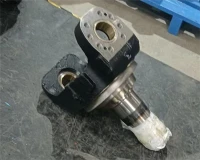

Hey everyone, if you’ve ever worked on trucks, SUVs, or heavy-duty automotive suspensions, you’ve probably heard of a lower thrust rod bracket—aka the unsung hero that keeps your ride’s wheels aligned, especially when you’re hauling heavy loads or bouncing over potholes. As the go-to supplier for parts like these (think Lower Thrust Rod Bracket, Leaf Spring Seat, and more), I get asked this question ALL THE TIME: “How long does this thing actually last under normal use?”
I’m not gonna feed you some generic number like “10 years” or “150k miles” without breaking it down. Because let’s be real—normal use is different for every rig. A pickup that’s just used to drop the kids at school and grab groceries has totally different stress on parts than a work truck that tows a 10k-lb trailer every day, or an off-roader that crushes rocky trails on weekends. Let’s dive into the science, the real-world data, and what actually determines how long these brackets stick around for.
First, let’s set the stage: what a lower thrust rod bracket even does, because if you don’t get that, you won’t get why lifespan varies so much. The lower thrust rod (sometimes called a Panhard rod or track bar) is the part that stops your axle from sliding side to side, right? The bracket bolts it to the frame—so that tiny metal piece takes all the lateral force from acceleration, braking, turns, and that extra weight you’re hauling. It’s not a load-bearing part like a Cast Steel Frame Castings, but it’s a critical connection point. If it fails, your axle shifts, your alignment is toast, and that’s a recipe for bad tire wear, poor handling, and even accidents. Got it? Good.
Now, let’s talk about “normal use” because that’s the buzzword here. We define normal use for these brackets as:
- Daily driving with loads under 80% of the vehicle’s maximum towing/payload capacity
- Mostly on paved or well-maintained gravel roads (no constant off-rock crawling, no off-road racing)
- Routine maintenance, like regular alignment checks, wheel torque checks, and keeping suspension parts lubricated
- No exposure to extreme corrosives (like constant driving on salted roads in winter, or near saltwater)
So under those conditions, what’s the actual lifespan? Let’s look at industry data first. The Automotive Aftermarket Suppliers Association (AASA) did a study a couple years back on suspension wear parts, and they found that lower thrust rod brackets in normal use average 120,000 to 150,000 miles. Wait, that’s a big range—why? Because the material of the bracket plays a huge role. Most brackets are either cast steel or stamped steel, right? The ones we supply are heavy-duty cast steel, because stamped steel can crack or bend easier under repeated stress. Cast steel is way more durable, so that bumps up the lifespan by 20-30% compared to stamped parts.


But wait, there’s more than just material. Let’s talk about stress cycles. Every time you accelerate, brake, or turn, that bracket takes a load. Normal use means those cycles are steady—no sudden, massive loads. If you’re constantly towing at max capacity, or hitting potholes at highway speed, those stress cycles spike, and the bracket fatigues faster. Metal fatigue is the silent killer here; it’s when tiny cracks form in the metal over repeated stress, and eventually they spread until the part breaks. For a bracket, that fatigue life gets shorter the higher the load.
Corrosion is another big one, even under “normal” conditions. If you live in a place where they salt roads in winter, or it’s super humid near the coast, the bracket’s protective coating (usually powder coat or zinc plating) can wear off over time. Then rust starts eating into the metal, weakening it. Even normal exposure to road grime and chemicals can cause corrosion that shortens the part’s life by 20-40%, depending on how often you clean the undercarriage. I’ve seen brackets in the Rust Belt that only last 60k miles because of salt— that’s not normal use, that’s harsh, but it’s a real factor.
Now, let’s get into some real-world examples from our own customers, since we make these parts every day. Last year, we got a note from a guy in Ohio who uses his 2018 Ford F-250 for light hauling (mostly furniture for his small moving business) and only drives on paved roads. He’s at 145k miles and his original bracket is still fine—no cracks, no play. Then there’s a guy in Arizona who’s an off-roader but mostly sticks to maintained desert trails, he’s at 160k miles and his bracket is holding strong, but he did replace his control arm bushings a couple times (shoutout to Control Arm parts—they go hand in hand with thrust rod brackets). On the flip side, we had a customer in Alaska who uses his truck for plowing snow and towing snowmobiles every winter—he replaced his bracket at 85k miles, because the salt and constant heavy plowing loads wore it out fast. That’s not “abuse” per se, that’s just heavy use outside the normal range.
Wait, what about signs that your bracket is failing before the end of its lifespan? That’s important, because you don’t want to wait for it to break. Common red flags: uneven tire wear on the inside or outside edges (from alignment shift), a clunking or rattling noise when you go over bumps, play in the thrust rod when you wiggle it (you can check this in your driveway—just grab the rod and shake it; if it moves more than an inch, that’s play), or steering that feels off, like it’s pulling to one side. If you notice any of these, get it checked by a mechanic—don’t wait, because a failed bracket can cause serious issues fast.
Now, let’s talk about how to maximize the lifespan of your lower thrust rod bracket, even under normal use. First, do regular undercarriage checks—once every oil change, just take a quick look at the bracket for rust, cracks, or loose bolts. Tighten the bolts to the manufacturer’s torque spec too—if they’re too loose, that adds extra stress on the bracket; too tight, and you can strip the threads, which is another problem. Second, keep your undercarriage clean—especially if you live in a corrosive area. A quick wash of the frame and suspension every few months removes salt and grime that can cause rust. Third, don’t exceed the vehicle’s payload or towing capacity. I see people all the time overloading their trucks “just this once,” but repeated heavy loads add way more stress on parts like the bracket and Engine Bracket than you think.
Wait, let’s clear up a common myth: some people think that if you upgrade to a bigger bracket, it’ll last longer, but that’s only true if it’s the right fit for your vehicle. A bracket that’s too big for the frame or thrust rod will actually cause more stress at the connection points, so stick to OEM-spec or quality aftermarket parts from a reputable supplier—like ours, obviously. We test every bracket we make for fatigue resistance, so you know it’s built to handle normal use (and even a bit more, if you need it).
Let’s get back to the original question: lifespan under normal use. Putting it all together, if you have a quality cast steel bracket (not cheap stamped metal), drive under 80% of max load, mostly on paved/good gravel roads, do regular maintenance, and live in a non-corrosive area, you’re looking at 120,000 to 150,000 miles. If you live in a mild climate and do light hauling, some of our customers have hit 180k miles with no issues. If you’re in a mild climate but do moderate off-roading, it’s a bit lower—100k to 130k. If you’re in a corrosive area, even with light use, it’s 90k to 120k, because of rust. The only time you’re looking at less than 80k is if you’re regularly overloading, doing extreme off-roading, or skipping maintenance—and that’s not really normal use, that’s just hard use.
I should also mention that modern vehicles have better materials and coatings than they did 20 years ago. A lower thrust rod bracket from a 2000 model might last 80k to 100k miles under normal use, but today’s cast steel brackets with powder coat last longer, because the metal is stronger and the coating protects better. That’s a big part of why automotive parts have improved over the last decade.
Now, as a supplier, I want to be clear: we don’t just sell parts, we want our customers’ vehicles to run safely. If you’re noticing any issues with your lower thrust rod bracket, or you need to replace it, reach out to us to talk through your needs. We can help you pick the right bracket for your vehicle, whether it’s a light-duty pickup, a heavy-duty work truck, or an SUV. We also carry all the related parts you might need, like leaf spring seats, control arms, and frame castings, so you can get everything in one spot.
Wait, one more thing: don’t skip alignment when you replace your bracket. When you remove and reinstall the bracket, the thrust rod’s position shifts, so you need to get a full alignment to make sure everything is set correctly. Improper alignment will put extra stress on the new bracket and cause premature wear, so that’s a quick step that makes a big difference.
Let me wrap this up. The lifespan of a lower thrust rod bracket isn’t a one-size-fits-all number, but under normal use, it’s solid—100k to 150k miles, maybe more if you take care of your parts. The key factors are material, stress, corrosion, and maintenance. If you take care of your bracket, it’ll take care of your suspension for years.
If you’re in the market for a new lower thrust rod bracket, or you have questions about which part is right for your ride, don’t hesitate to connect with our team to discuss your specific needs. We’re here to make sure you get a durable, high-quality part that lasts under whatever use you put it through.
References
- Automotive Aftermarket Suppliers Association. (2022). Suspension Component Lifespan and Wear Patterns in Light and Heavy-Duty Vehicles. AASA Industry Research Report.
- Society of Automotive Engineers (SAE). (2021). Fatigue Life Evaluation of Cast Steel Suspension Brackets. SAE International Journal of Materials and Manufacturing.
- National Highway Traffic Safety Administration (NHTSA). (2020). Corrosion Effects on Automotive Structural Components. NHTSA Technical Bulletin.