
Rail Transit Castings
Custom Rail Transit Castings and OEM Manufacturing Solutions
Global Engineering and Procurement Excellence
Engineered for heavy-duty rolling stock, bogie assemblies, and rail infrastructure. Manufactured to international standards with rigorous material traceability and certified quality documentation.
-
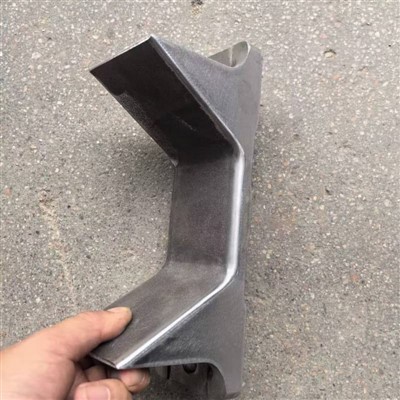 Shock Absorber MountingThis vibration isolation base is a core damping component for high-speed rail and subway systems, precision cast to securely mount shock absorbers to the vehicle chassis. It effectively absorbs andAdd to Inquiry
-
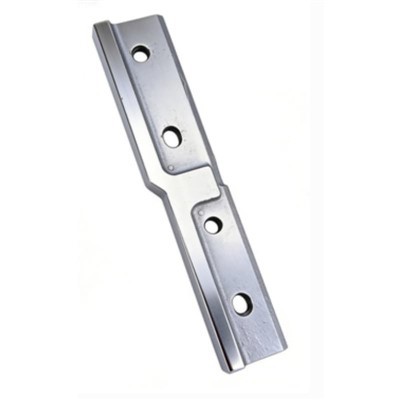 Rail Joint BarThis rail joint plate (also known as fish plate) is a critical connecting component for rail transit systems, precision cast and machined to securely join two sections of railway rails. It ensuresAdd to Inquiry


- Tel: +8618053672736
- WhatsApp: +8619157123033
- gjywb@qzsckj.cn
- Add: Industrial Park, Mihe Town, Qingzhou City, Weifang, Shandong Province
Product Overview and Applications
Rail transit components operate in high-stress, dynamic environments requiring precise geometries, high fatigue resistance, and absolute dimensional stability. Custom manufacturing aligns component designs with assembly interfaces, operating loads, and international railway standards.
|
Component Category |
Typical Applications and Functions |
|
Structural and Bogie Castings |
Frame brackets, bolster components, and heavy-duty structural supports. |
|
Equipment Housings |
Gearbox housings, motor covers, and auxiliary system enclosures with vibration-damping profiles. |
|
Connection Components |
Integrated bosses, mounting features, and intricate internal cored passages. |
|
CNC-Machined Castings |
Precision components featuring tight-tolerance bores, threads, and critical mating surfaces. |
|
Replacement Parts |
Reverse-engineered or built-to-print castings manufactured from approved CAD models or physical samples. |
Materials and Manufacturing Processes
Material selection and manufacturing route evaluation balance structural integrity, weight optimization, and production economics.
Material Specifications and Standards
• Ductile Iron (SG Iron): Selected for high tensile strength, elongation, and impact toughness (e.g., EN-GJS-400-18U, ASTM A536).
• Gray Iron: Utilized for housings and brackets requiring superior vibration damping and compressive strength (e.g., EN-GJL-250, ASTM A48).
• Carbon and Alloy Steels: Specified for high-stress structural applications requiring custom heat treatment and superior mechanical properties.
• Aluminum Alloys: Engineered for weight-reduction initiatives in unpowered rolling stock components.
Manufacturing Routes
• Resin Sand Casting: Ideal for medium-to-large structural components requiring high dimensional control and smooth surface finishes.
• Investment Casting (Lost Wax): Best suited for complex, net-shape components with intricate geometries, minimizing subsequent machining.
• Precision CNC Machining: Multi-axis machining centers ensuring tight geometric tolerances and fine surface roughness (Ra less than or equal to 1.6 micrometers).
•Heat Treatment and Surface Protection: Normalized, quenched, tempered, or stress-relieved per specification; finished with industrial priming, epoxy coating, or hot-dip galvanizing.

We partner with engineering teams from initial prototype development through to volume serial production.
Technical and CAD Review: Engineering Feasibility Assessment
Comprehensive evaluation of 2D drawings, 3D CAD files, and acceptance criteria. We analyze wall thickness gradients, draft angles, machining allowances, and datum surfaces to prevent casting defects.
Process and Tooling Optimization: Simulation and Sample Development
Casting solidification simulation, pattern/tooling design, and prototype sample development prior to full-scale commitment.
Precision Production and Machining: Controlled Manufacturing Batches
Batch production utilizing stable foundry processes followed by precise CNC machining, tapping, and surface finishing.
Inspection and Global Logistics: Documentation and Export Packaging
Multi-stage quality verification, material testing, secure export packaging, and reliable international logistics coordination.
Quality Assurance, Compliance, and Traceability
Global rail operators require absolute compliance and traceability. Our quality management systems align with international standards (ISO 9001:2015 framework and relevant railway quality expectations).
Dimensional and Visual Verification: CMM (Coordinate Measuring Machine) inspection for critical tolerances and surface defect examination.
Metallurgical and Material Testing: Spectrometric chemical analysis, tensile testing, and Brinell/Rockwell hardness testing.
Non-Destructive Testing (NDT): Magnetic Particle Testing (MT), Penetrant Testing (PT), and Ultrasonic Testing (UT) conducted by certified level inspectors upon request.
Comprehensive Documentation: Full material test certificates (EN 10204 3.1), dimensional inspection reports, and heat treatment charts supplied with every batch.
Technical Specifications and RFQ Data Checklist
To accelerate your quotation process and ensure precise engineering alignment, please include the following parameters in your RFQ:
|
Parameter |
Information to Confirm |
|
Component Details |
Part name, application function, and rolling stock assembly location. |
|
Engineering Data |
2D drawings (PDF/DWG), 3D CAD models (STEP/IGES), or approved sample. |
|
Material and Standard |
Specified material grade (e.g., EN, ASTM, JIS) and required mechanical properties. |
|
Machining Scope |
Critical finished dimensions, tolerance classes, datum surfaces, and thread specifications. |
|
Inspection and Testing |
Required NDT methods, acceptance standards, and quality documentation level. |
|
Commercial Demand |
Prototype quantity, initial production batch size, and projected annual usage (PAU). |
Frequently Asked Questions

Request a Quotation
Ready to discuss your railway equipment or rolling stock project? Submit your technical requirements below to connect directly with our engineering and sales team.
Email Inquiries: Send your 2D drawings, 3D CAD files, and material specifications directly to our engineering review team.
Response Commitment: Our technical team reviews all incoming drawing submissions and responds with a preliminary feasibility assessment and quotation framework within 24 to 48 business hours.
As one of the leading rail transit castings manufacturers and suppliers in China, we warmly welcome you to buy discount rail transit castings for sale here and get free sample from our factory. If you have any enquiry about customized service, please feel free to email us.
Shock Absorber Mounting, rail transit castings, Rail Joint Bar