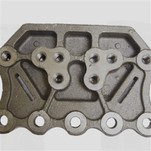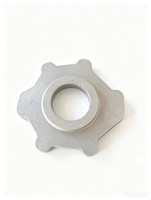

Aluminum alloy has a density roughly one-third that of steel, while offering good specific strength, thermal conductivity, corrosion resistance and machinability - making it a core material for lightweighting in equipment manufacturing. Through casting, molten aluminum is formed in a single step into complex near-net-shape parts; combined with subsequent machining and surface treatment, these parts become lightweight, dimensionally stable and fully interchangeable structural components. They are widely replacing cast iron and cast steel parts in applications such as automotive, machinery, electric motors, pumps and valves, and construction machinery.
When sourcing aluminum castings, three points are essential: whether the forming process matches the batch size and part geometry, whether the alloy grade meets the performance requirements, and whether post-processing and inspection can guarantee delivery quality.