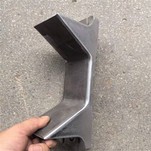

Automotive castings refer to blanks or finished parts with specific shapes, dimensions, and properties obtained by casting molten metal (such as cast iron, cast steel, aluminum alloys, magnesium alloys, etc.) into a mold adapted to the shape of the automotive component, followed by cooling and solidification.
Key Points
Manufacturing Method: Liquid metal is poured, injected, or sucked into a pre-prepared mold cavity, and then cooled and solidified to form a part.
Common Materials:
Ferrous Metals: Cast iron, cast steel (used for engine blocks, transmission housings, etc.)
Non-ferrous Metals: Aluminum alloys, magnesium alloys (widely used for engine cylinder heads, wheel hubs, battery trays, etc., especially driven by lightweighting requirements)
Main Process Types:
Sand casting (most common, accounting for about 80%)
Die casting (suitable for thin-walled complex parts such as aluminum alloys and magnesium alloys)
Metal mold casting (hard mold casting)
Special processes such as lost foam casting and low-pressure casting