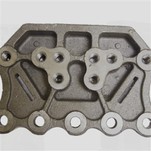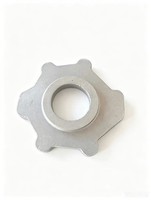

The material is mainly cast steel: due to high strength and good toughness, it is suitable for high impact load conditions; However, it is necessary to pay attention to large contractions, easy to produce pores and shrinkage.
The structure needs to adapt to the casting process:
Uniform wall thickness to avoid sudden changes and prevent thermal cracking and shrinkage;
Set the riser and cold iron to achieve sequential solidification;
The direction of the mold should be sloped (usually ≤3°).
Typical defects and responses
Common defects: porosity, shrinkage, looseness, cracks (especially at the sudden change of section).
Design Countermeasures:
Reduce hot nodes and optimize the layout of ribs;
Hollow or partially thickened structure is used for thick parts;
The pressure-bearing part (such as the mounting surface of the hydraulic cylinder) needs to ensure air tightness.