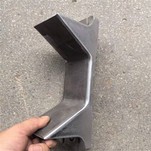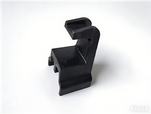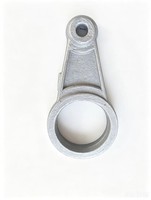

The agricultural machinery installation base is the fundamental structure that supports and secures key components of agricultural machinery. Its basic characteristics vary depending on the specific type of machinery and application scenarios, but based on publicly available information, the following common features can be summarized:
Basic Structural Components
Support Surface: Usually made of high-strength steel plate, providing a flat and stable installation foundation.
Supporting Columns/Frames: Used to connect the support surface with the upper equipment and transmit the load.
Connectors: Such as bolts, U-shaped rails, T-shaped tie rods, etc., allowing for quick installation and disassembly.
Counterweight Blocks (in some designs): Used to balance the equipment's center of gravity and enhance stability.
Core Functional Characteristics
High Load-Bearing Capacity: Can withstand dynamic loads (for example, some bases support 200–350 tons of load).
Deformation-Resistant Design: Structural reinforcements such as ribs and U-shaped strips improve rigidity, increasing deformation resistance by up to 60%.
High Positioning Accuracy: The spacing error between dual vertical support plates is controlled within ±1.2mm, with some using angled iron positioning to achieve ±0.5mm accuracy.
Adaptability to Complex Terrain: For example, crawler chassis use a "four wheels and one track" structure, with evenly distributed support wheel pressure and low ground pressure, suitable for hilly areas, paddy fields, and other environments.